


What is Conveyancing?
Buying a home is likely to be one of the biggest financial decisions you’ll make. While much of the focus tends to be on mortgages, surveys and moving dates, there’s also a legal process taking place behind the scenes to ensure ownership can be transferred correctly and that the transaction can proceed without avoidable complications.
This process is known as conveyancing. It covers the legal transfer of ownership from one person to another and usually begins once an offer has been accepted. From that point onwards, contracts need to be reviewed, searches carried out and various checks completed before the transaction can progress to completion.
Whether you’re buying a house, selling a flat, remortgaging or transferring ownership of a property, conveyancing helps protect everyone involved. By investigating potential issues early, such as planning restrictions, rights of way, boundary disputes or title defects, the process reduces the risk of problems arising later in the transaction.
A conveyancing solicitor or licensed conveyancer will oversee this work on your behalf, managing the legal aspects of the transaction from start to finish. They will liaise with the other parties involved, deal with contracts and enquiries, and help ensure everything is in place before ownership can officially change hands.
Once an offer has been accepted, it’s often difficult to know what is happening behind the scenes or why progress can sometimes feel slow. In this guide, we’ll explain what conveyancing involves, the role your conveyancer plays, the key stages of the transaction and the factors that can affect timescales and costs.
What does a Conveyancer Do?
Property transactions often involve far more moving parts than many buyers expect. Alongside contracts and mortgage arrangements, there may be searches to obtain, legal enquiries to resolve and deadlines to coordinate between multiple parties.
A conveyancer handles the legal side of the transaction from start to finish. Their role is to identify legal risks, explain any issues that arise and ensure every stage of the process has been completed correctly before ownership is transferred.
Typical responsibilities include:
- Reviewing contracts and legal documents
- Conducting property searches
- Raising enquiries with the other party’s solicitor
- Liaising with mortgage lenders
- Advising on legal risks associated with the property
- Managing the exchange of contracts
- Arranging completion and transfer of funds
- Registering ownership with HM Land Registry
Much of this work takes place behind the scenes, which means buyers and sellers may not always see what’s being done on their behalf. However, these checks can uncover issues that might otherwise cause delays, disputes or unexpected costs after completion.
How does the Conveyancing process work?
No two property transactions are exactly the same. A straightforward freehold purchase will often look very different from a leasehold flat purchase involving a long property chain.
That said, most conveyancing matters follow a similar path from instruction through to completion.
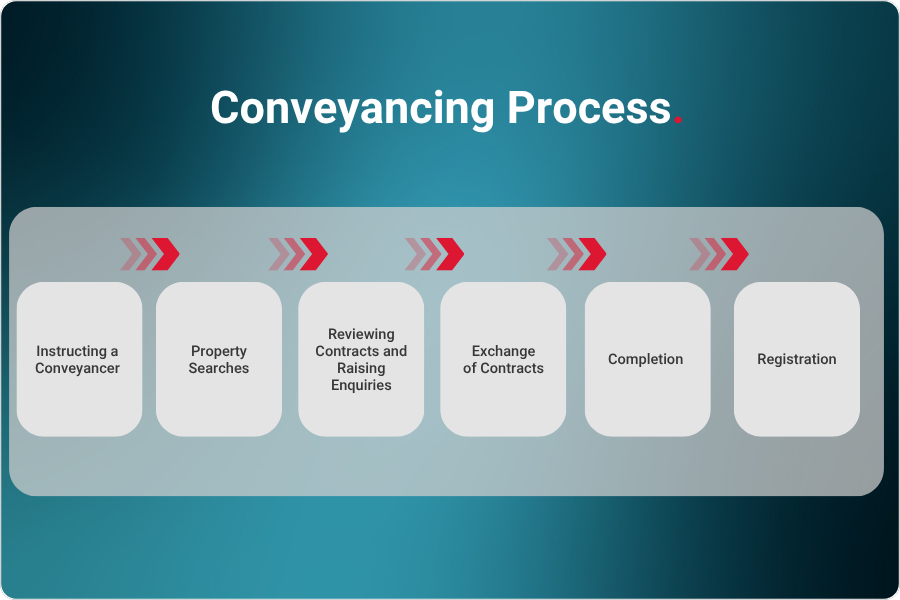
Instructing a Conveyancer
Once an offer has been accepted, both the buyer and seller will normally instruct a conveyancer to act on their behalf.
The conveyancer will carry out identity checks, obtain the initial documentation and begin gathering the information needed to progress the transaction.
Property Searches
For many buyers, this is where the reality of the transaction starts to sink in. Up until this point, you’ve found a property you like, agreed a price and started making plans. However, your conveyancer’s job is to look beyond the estate agent’s particulars and identify any issues that could affect the property or create problems in the future.
To do this, your conveyancer will carry out a series of property searches with the relevant authorities.
These commonly include:
- Local authority searches
- Environmental searches
- Water and drainage searches
Depending on the property’s location, additional specialist searches may also be required.
While it’s natural to assume that a property is exactly as it appears, searches can sometimes reveal unexpected issues. These might include planning restrictions, proposed developments, flood risks, contaminated land or drainage concerns that would not be obvious from a viewing alone.
Most searches don’t reveal anything serious, but when issues do arise, it’s far better to discover them before you’re legally committed to the purchase. This is one of the key reasons people instruct conveyancing solicitors. Their role is not only to process paperwork, but to identify and manage potential risks so that buyers can make informed decisions before moving forward.
Reviewing Contracts and Raising Enquiries
Alongside property searches, the conveyancer will review the contract pack and supporting documents provided by the seller’s solicitor. This stage is often one of the most important parts of the conveyancing process, as it provides an opportunity to investigate anything that isn’t clear before contracts are exchanged.
It’s also the stage where many buyers start receiving large amounts of legal paperwork, which can sometimes feel overwhelming. Questions often arise about what certain clauses mean, what responsibilities come with the property and whether there are any restrictions that could affect future plans.
As part of their review, the conveyancer will raise enquiries where information is missing, inconsistent or requires further clarification. These enquiries commonly relate to:
- Boundaries
- Rights of way
- Planning permissions
- Building regulations
- Leasehold obligations
In addition to legal enquiries, standard pre-contract enquiries and fixtures and fittings forms will also be reviewed. These documents contain important information about the property’s history, any works carried out by the seller and exactly what will be included in the sale.
Although your conveyancer is responsible for reviewing the legal documentation, buyers also have an important role to play. If anything in the paperwork seems unusual, confusing or doesn’t match your understanding of the property, it’s important to raise it. Conveyancing works best when buyers actively engage with the information they are given rather than assuming every concern will automatically be identified.
If issues are going to arise during a transaction, this is often where they first emerge. While that can feel frustrating at the time, identifying problems before exchange of contracts is usually far preferable to discovering them after you’ve completed the purchase. A significant part of a conveyancing solicitor’s role is helping clients navigate these issues, reduce risk and move forward with confidence.
Exchange of Contracts
Exchange of contracts is one of the most significant stages of the conveyancing process. Before exchange can take place, searches need to be completed, enquiries resolved and mortgage arrangements finalised.
This is the final stage where the nightmare scenario of ‘gazumping’ can occur. Gazumping is when a property seller accepts an offer from a buyer, but then accepts a higher or better offer from a second buyer before contracts are officially exchanged.
Once contracts have been exchanged, the transaction becomes legally binding and a completion date is agreed. From this point onwards, both parties are committed to proceeding with the transaction. The period between exchange and completion can vary depending on the circumstances of the sale.
Completion
Completion is the point at which ownership officially changes hands. The buyer’s solicitor transfers the purchase funds to the seller’s solicitor and, once the money has been received, the keys are released.
For most people, this is the moment the transaction finally becomes real, marking the end of the conveyancing process and the beginning of the next chapter.
Registration
Although the sale has completed, there is still some administrative work to be carried out. The buyer’s conveyancer will submit the relevant documents to HM Land Registry so ownership records can be updated and the buyer can be registered as the property’s legal owner.
How long does Conveyancing take?
One of the first questions both buyers and sellers usually ask is how long conveyancing will take. The reality is that every transaction is different, and the timeline can vary depending on the property, the parties involved and any complications that arise along the way.
As a general guide, many conveyancing transactions take between 8 and 16 weeks. Straightforward freehold purchases often move more quickly, while leasehold properties and lengthy chains can add additional time to the process.
A transaction’s progress is often influenced by third parties, including mortgage lenders, surveyors, local authorities and management companies. For this reason, timescales should always be viewed as estimates rather than guarantees.
What can delay Conveyancing?
Even where everyone is keen to move forward, delays can happen. Property transactions rely on information being exchanged between multiple parties, and progress can quickly slow if one part of the process takes longer than expected.
Common causes of delay include:
- Property chains
- Delays with mortgage approvals
- Issues uncovered during searches
- Missing documentation
- Leasehold complications
- Disputes over title or boundaries
- Slow responses from third parties
Some delays are unavoidable, particularly where external organisations are involved. However, returning paperwork promptly, providing information when requested and instructing a conveyancer early can all help reduce the risk of unnecessary hold-ups.
Need help with Conveyancing?
Save yourself potentially thousands of pounds by seeking advice now. Speak to us today for more information.


How much does Conveyancing cost?
The cost of conveyancing will depend on the property involved and the complexity of the transaction. Factors such as leasehold arrangements, new-build purchases and the value of the property can all influence the overall cost.
In most cases, conveyancing costs can be divided into two categories: legal fees and disbursements.
Legal Fees
Legal fees are the charges paid to your conveyancer for carrying out the work associated with your transaction. The amount charged will vary depending on the nature of the matter and the level of support required.
Disbursements
Disbursements are costs paid to third parties as part of the conveyancing process. Unlike legal fees, these payments are made to external organisations rather than your conveyancer.
Common examples include:
- Property searches
- HM Land Registry fees
- Bank transfer fees
- Stamp Duty Land Tax (where applicable)
Before instructing a conveyancer, it’s always worth obtaining a clear breakdown of both legal fees and disbursements so you understand exactly what is included within the quote.
Looking for a clearer idea of what your transaction may cost? View our conveyancing fees and pricing for a full breakdown of legal fees, disbursements and fixed-fee services.
Can a Conveyancer act for both parties?
In most property transactions, the buyer and seller will have separate legal representation. This helps ensure that both parties receive independent advice and that potential conflicts of interest can be avoided.
As a result, a conveyancer will not usually act for both the buyer and seller in the same transaction. There are limited circumstances where exceptions may apply, but separate representation is generally considered best practice and is often expected by mortgage lenders.
Do I need a Conveyancer?
There is no legal requirement to instruct a conveyancer when buying or selling a property. However, property transactions involve a considerable amount of legal and administrative work, which is why most buyers and sellers choose to seek professional assistance.
What appears to be a straightforward transaction can quickly become more complicated when title issues, leasehold obligations, lender requirements or missing documentation come into play. Identifying and resolving these issues often requires experience and a detailed understanding of property law.
A conveyancer’s role extends far beyond paperwork. They help manage risk, resolve problems and ensure all legal requirements have been met before ownership changes hands, giving buyers and sellers confidence throughout the process.
What makes a good Conveyancer?
When buying or selling a property, choosing the right conveyancer can make a significant difference to your experience. While many people focus on cost alone, effective conveyancing is about much more than obtaining the lowest quote.
A good conveyancer will communicate clearly, respond promptly to enquiries and keep you informed throughout the transaction. They should also take a proactive approach to identifying potential issues before they become major obstacles, helping to keep your move progressing smoothly.
You should also look for a conveyancer who provides transparent pricing, realistic timescales and a dedicated point of contact. Property transactions often involve multiple parties, and having someone available to explain what is happening can make the process far less stressful.
At Britton & Time Solicitors, our conveyancing team combines practical legal expertise with a client-focused approach. You’ll have a dedicated point of contact throughout your transaction, fixed-fee pricing with no hidden surprises and regular updates, so you’re never left wondering what happens next.
Get in contact
Save yourself potentially thousands of pounds by seeking advice now. Speak to us today for more information.

About the Author






Leave a comment Your email address will not be published.