
If you’ve been offered a settlement agreement by your employer, you may be wondering what your options are. Is the amount fair? Can you ask for more? And what happens if you simply say no?
This guide explains what to look at before accepting an offer, how to decide whether the settlement is reasonable and what you may be able to negotiate.
If you need advice on a settlement agreement, call our employment law team on 01273 726951 or visit our Settlement Agreement Solicitors page.
What is a Settlement Agreement?
Settlement agreements are used to bring an individual’s employment to an early end, usually at the end of a redundancy process, or to resolve a dispute. They typically include a lump sum payment, together with other conditions, such as to not bring certain claims against the former employer.
Put simply, settlement agreements state “we’re agreeing your employment is over, here is some money in exchange for these things that you cannot do”.
Need help with a Settlement Agreement?


What is a reasonable settlement offer?
Most people look at settlement offers in terms of the financials and there isn’t a standard figure that makes a settlement agreement fair. An offer of £10,000 might be reasonable for one employee and disappointing for another. It depends on what your employer is offering and, what you’re already entitled to.
Importantly, you should not overlook the terms that outline the rights that you are giving up in exchange for the settlement lump sum. Again, what is fair with regard to the settlement terms differs from individual to individual. For example, an employee who has received a settlement offer during a dispute against their employer may want a larger lump sum to offset waiving their rights compared to an employee being made redundant.
When looking at your settlement offer, there’s a few things to bear in mind:
Financial offer
Start by looking at how the payment is made up and what each part covers.
A settlement agreement may include notice pay, outstanding salary, unused holiday, commission or bonus payments, as well as a separate compensation payment. It is worth checking which amounts you are already entitled to receive, regardless of whether you agree to sign. The value of the overall offer will depend on your circumstances, including your salary, length of service, the reason for your employment ending, the strength of any potential claims and how long it might take you to secure another job at a similar level.
You should also consider how much you will actually receive once tax has been deducted. Salary, holiday pay, bonuses and notice payments are generally taxable. However, certain qualifying termination payments may fall within the £30,000 tax exemption.
However, in some cases, employers may simply offer what you the minimum of what you would already have been entitled to if you had resigned.
Your reference and future employment
Before agreeing to the terms, consider how your departure might affect your search for another job. If the employer has offered an agreed reference, take the time to read through it. Make sure it accurately describes your role and employment history and includes the information you would expect a prospective employer to receive. If no reference has been included, it may be worth asking for one as part of the agreement.
Employers are not usually obliged to provide a reference, but there is nothing to prevent one being agreed as part of a settlement. This can be particularly helpful where relations with your employer have broken down. It is much better to know what reference will be provided before signing than to find yourself concerned about it when applying for new roles.
Clauses that could affect what you do next
Pay close attention to any restrictive covenants included in the agreement or carried over from your existing employment contract.
These restrictions may prevent you from working for a competitor, contacting certain clients or approaching former colleagues about joining you elsewhere. They may apply for a set period after your employment ends.
Although enforceability depends on the wording and circumstances, you need to be clear about what they mean in practice before accepting another position.
This is particularly important if you already have another employer in mind or if you’re thinking of setting up your own business.
A restriction that could prevent you from taking up a new role may have a much greater financial impact than a relatively small increase in the settlement payment. It may therefore be worth negotiating changes to the wording or asking for certain restrictions to be removed.
Confidentiality and non-derogatory clauses also deserve attention. Check who you are permitted to discuss the agreement with, what you can say about your departure and whether the employer is subject to the same obligations.
An agreement that restricts only what you can say, without placing similar expectations on the employer, is worth questioning.
Leaving date, notice and benefits
The timing of your departure can make a difference to the overall value of the agreement, particularly where there are benefits attached to your employment.
Look at the proposed termination date and consider how it affects your salary, notice entitlement, bonus, pension contributions, private medical insurance, share schemes and any other benefits you currently receive.
You should also establish what is expected during your notice period. You may be required to continue working, placed on garden leave or offered a payment in lieu of notice. Each arrangement has different implications, so the right option will depend on your circumstances.
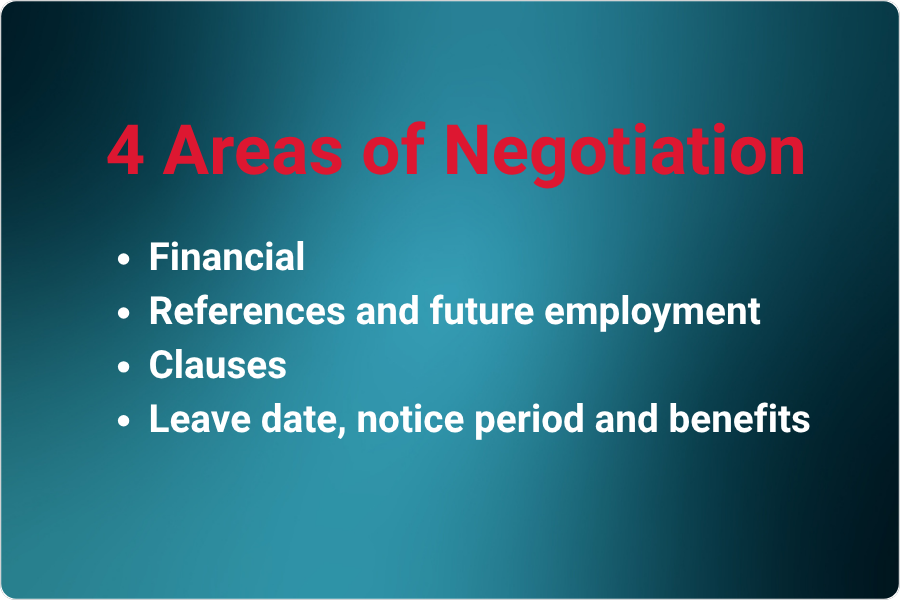
Can you negotiate your settlement agreement?
Yes. You do not have to accept the first terms offered by your employer. Settlement agreements are voluntary and you can make a counter-offer if you are unhappy with the amount offered or another part of the agreement.
Negotiating doesn’t necessarily mean asking for more money. You may be happy with the financial offer but concerned about your reference, the date your employment will end or a restrictive covenant that could affect your next job.
Again, context is important. Many large employers regularly make redundancies or have open voluntary redundancy schemes as part of re-structures. Under these circumstances, the company could be more willing to negotiate a settlement offer than a company making redundancies due to low revenues.
What should you consider before negotiating?
Before making a counter-offer, consider the position both you and your employer are negotiating from.
Your negotiating position may be stronger if you have grounds for a potential Employment Tribunal claim or if there have been problems with an ongoing redundancy or disciplinary process. Your employer may also be more willing to improve its offer if it wants to avoid a lengthy (and potentially costly) dispute and reach an agreed exit.
Equally, if your employer believes it has followed a fair process and has little risk of a claim, it may be less willing to offer additional compensation. Your circumstances matter too: if you already have another job lined up, changing a restrictive covenant or leaving date may be more valuable than additional compensation.
Think about what each side stands to gain or lose if no agreement is reached, as this will help determine where you have leverage and which terms are genuinely worth negotiating.
How can a solicitor negotiate a better settlement agreement?
You can negotiate a settlement agreement yourself, but knowing what to ask for and what is reasonable are two different things.
An employment solicitor can look at the circumstances of your departure, whether you may have grounds for a claim and how this could affect the value of the offer. They can also check whether the payment includes sums, such as salary, holiday pay or notice, that you are already entitled to receive.
This gives you a clearer idea of where there is room to negotiate. The issue may not even be the compensation figure. Reference wording, restrictive covenants or the proposed leaving date could have a greater impact on your future employment.
Your solicitor can raise these points with the employer and negotiate changes on your behalf. Although there is no guarantee of a better offer, you will have a clearer understanding of what is reasonable to ask for and where your employer may be willing to compromise.
Our employment solicitors regularly negotiate on behalf of employees to increase settlement figures, with an average increase of £2,000 per settlement.
Will my employer cover the cost of my solicitor negotiating the agreement?
Employers will only cover the cost of independent legal advice on the settlement agreement itself. This is done to ensure you understand the legal implications of the document that you are signing.
Employers usually won’t cover the fees associated with negotiating a settlement agreement and you will need to cover these with your chosen employment solicitor.
Depending on the nature of the changes you would like, our employment solicitors will usually usually charge a fixed fee or hourly rate to negotiate. In the case of negotiating significant changes to the financials, we may agree to take a share of the increase if successful. This will always be agreed with you beforehand so you know exactly where you stand.
Why do you need a solicitor for a settlement agreement?
Even if you’re happy with the offer and don’t intend to negotiate, independent advice is required for the settlement agreement to validly settle the relevant statutory claims.
Your adviser needs to explain the terms and effect of the agreement, including how signing it affects your ability to pursue the claims covered by it. A solicitor is not the only person who can provide the required advice. An appropriately authorised trade union representative or advice centre worker may also qualify. The adviser must meet the relevant requirements, be appropriately insured and be identified in the agreement.
If you’re unsure whether to accept the offer, however, a settlement agreement solicitor can go further than explaining the document. They can advise on whether the terms are reasonable and, where appropriate, negotiate changes before you sign.
If you need advice on a settlement agreement, call our employment law team on 0203 007 5500 or visit our Settlement Agreement Solicitors page.
Frequently asked questions
What happens if I don’t sign a settlement agreement?
You do not have to sign a settlement agreement. If you reject the offer, your employer may continue with an existing redundancy, performance, capability or disciplinary process, or the underlying workplace dispute may continue. What happens next will depend on why the agreement was offered.
Can I ask my employer for a settlement agreement?
Yes. A settlement agreement does not have to be suggested by your employer. An employee can raise the possibility of an agreement where, for example, a workplace dispute or breakdown in the employment relationship could potentially be resolved through an agreed exit.
Do I have to accept the first settlement offer?
No. Settlement agreements are voluntary and the terms can be negotiated. You can make a counter-offer if you believe the financial payment or another part of the agreement should change.
About the Author